
Your Guide to Dental Implant Care in Austin, TX
Related Posts



.jpg)

Caring for your new dental implants is much like caring for natural teeth—it all comes down to consistent daily hygiene and regular professional check-ups with your dentist. The key is to use gentle, non-abrasive tools and techniques to keep the area clean and prevent gum inflammation. By following this advice, your new smile can last a lifetime, giving you the confidence you deserve.
Lifelong Dental Implant Care from Your Dentist in Austin & Georgetown
You've made a wonderful investment in your smile, and our team at 3D Dental is here to help you protect it. Whether you're looking for a "dentist near me" in North Austin or Georgetown, TX, learning the right care routine is the final step toward a healthy, lasting smile. While it may feel like a new responsibility at first, it quickly becomes a simple, natural part of your day.
If you're experiencing pain from a missing tooth or an uncomfortable denture, dental implants offer a permanent solution. This guide provides practical, real-world advice straight from our experienced cosmetic dentistry team. We'll cover daily hygiene, why professional cleanings are essential, and simple lifestyle choices that make a huge difference for our patients from Cedar Park to Round Rock.
Let's begin with what to expect right after your dental implant procedure.
Your Immediate Post-Surgery Care Timeline
The first few weeks after your implant surgery are critical for proper healing. A good care plan helps manage discomfort, prevents complications, and sets you up for long-term success. It’s all about gentle care and allowing your body to heal without interruption. This initial phase is crucial for ensuring the implant properly fuses with your jawbone.
This timeline gives you a snapshot of the key milestones in your post-implant journey, from the first 24 hours to the first month.
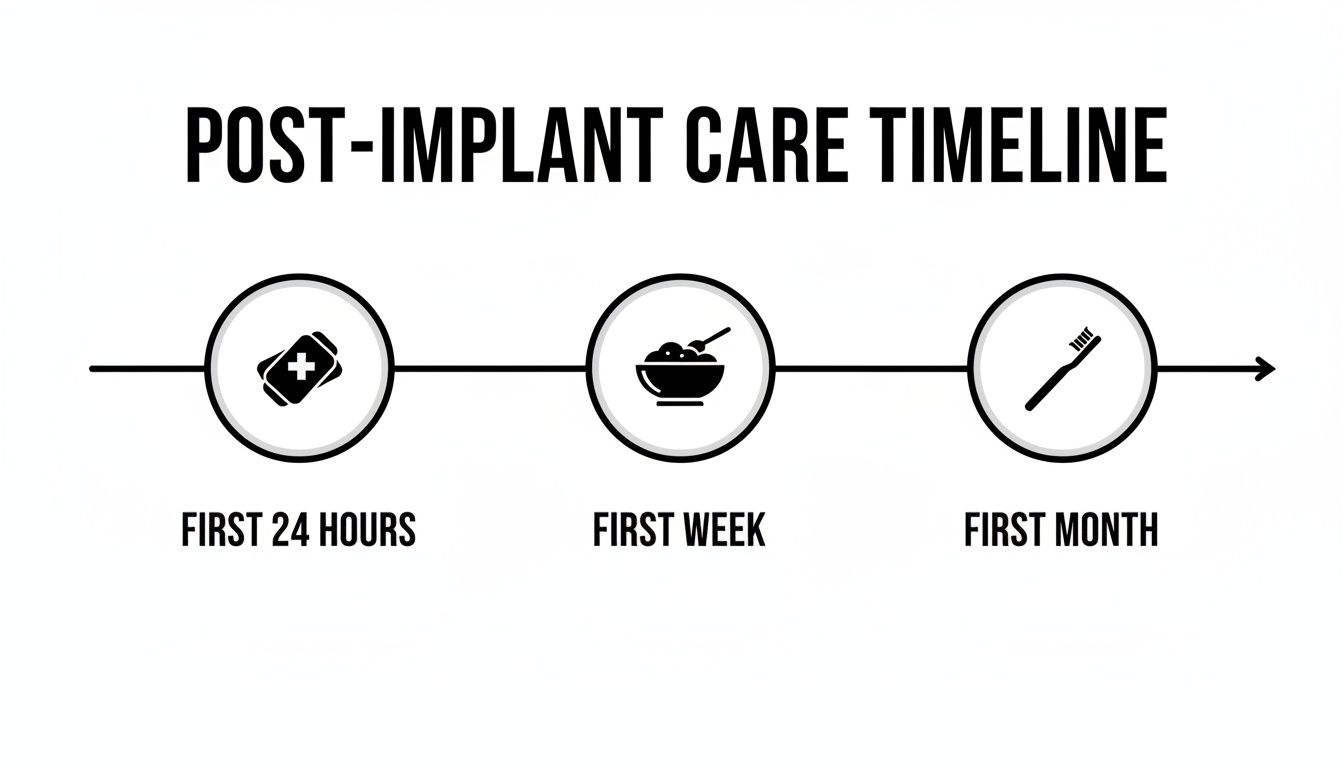
This healing process is a partnership between you and your dental team. While the first month requires more delicate care, it truly builds the foundation for decades of implant stability and a pain-free smile.
Below is a more detailed breakdown to guide you through this initial phase, whether you're recovering at home in Austin or Georgetown.
Your Immediate Post-Surgery Care Timeline
A simplified timeline outlining key care steps from the first 24 hours to the first few weeks after your implant procedure at our Austin or Georgetown dental office.
Following this timeline closely gives your implant the best possible chance to heal perfectly and integrate with your jawbone.
At 3D Dental, our commitment is to guide you through every phase of your implant journey. We provide personalized post-operative instructions and are always available to answer questions, ensuring patients in Austin and Georgetown feel supported and confident in their new smile.
The Foundation of Long-Term Success
This level of care is precisely why dental implants have become the gold standard for tooth replacement. They boast an impressive success rate, with studies showing 95% functionality over a 10-year period. This incredible reliability comes from following care routines that mimic natural tooth maintenance, promoting lasting mouth health.
At 3D Dental, your trusted dentist in North Austin and Georgetown, Texas, we use advanced 3D CT imaging to monitor everything precisely. This contributes to the 98% success rate seen in All-on-4 procedures. When patients stick with good habits, 86-92% of implants are still functional even after 20 years. You can read more about these impressive dental implant statistics and their long-term viability.
To achieve that kind of longevity, focusing on these key steps during your initial recovery is crucial:
- Managing Discomfort: Take any prescribed pain relievers as directed. An ice pack applied to the cheek in 15-minute intervals can really help reduce swelling in the first 24-48 hours.
- Dietary Choices: Stick to soft foods for the first week. Think yogurt, smoothies (no straws!), mashed potatoes, and lukewarm soups. Steer clear of anything hard, crunchy, or spicy that could irritate the surgical site.
- Gentle Hygiene: For the first few days, avoid brushing the implant area directly. Instead, use a prescribed or warm saltwater rinse to keep the area clean. You can—and should—gently brush your other teeth as usual.
By following these initial guidelines, you create the best possible environment for osseointegration. This is the amazing biological process where your jawbone fuses with the titanium implant post. This bond is what makes dental implants so strong and stable, providing a rock-solid foundation for your new tooth. For our patients in Wells Branch and Liberty Hill, TX, we even offer detailed aftercare kits to make this process as simple as possible.
Mastering Your Daily Implant Hygiene Routine
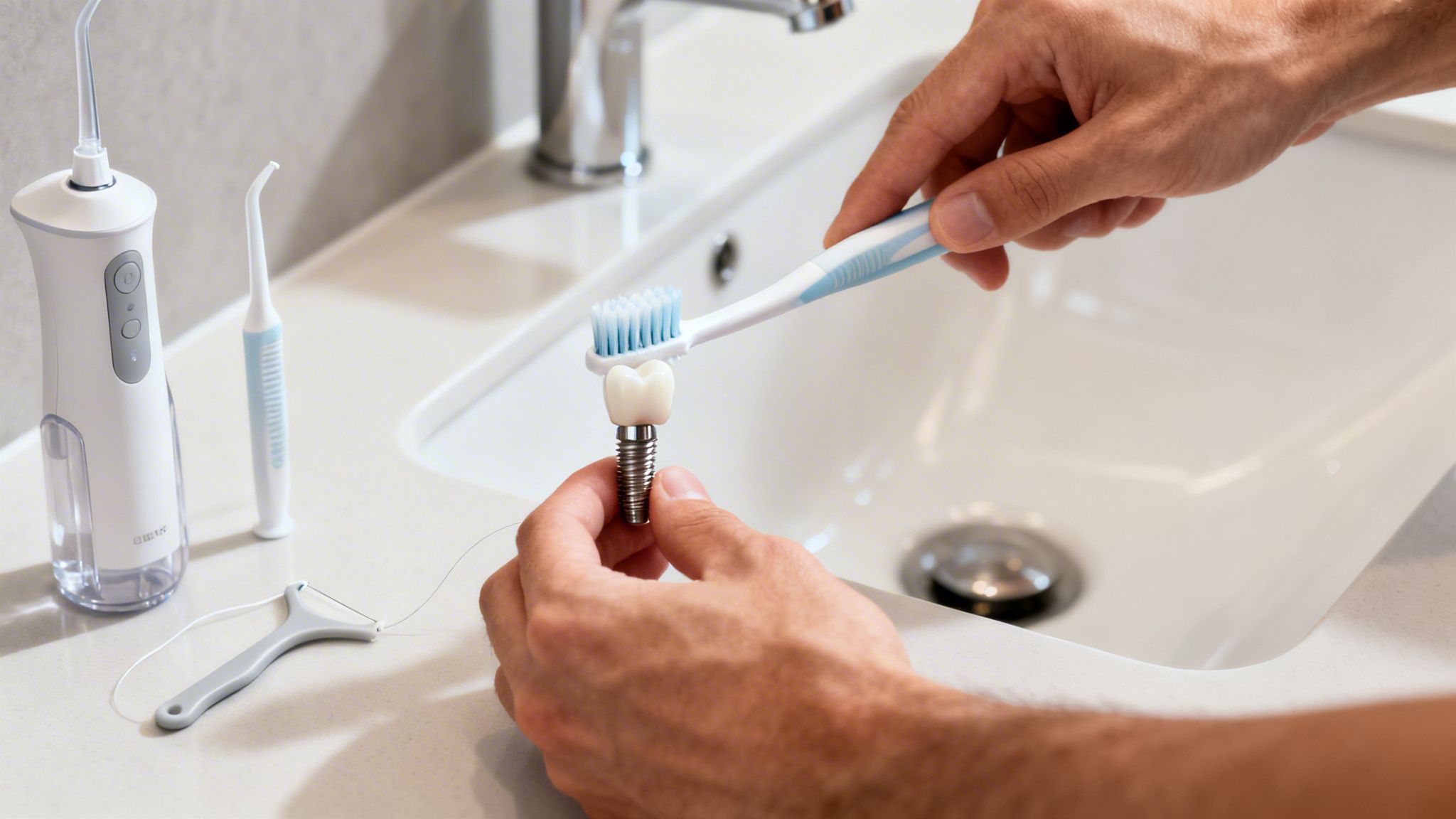
Once you’re past the initial healing phase, taking care of your dental implants becomes a simple, lifelong habit that protects your investment. The primary goal is to keep the implant post, the abutment (the connector piece), and your beautiful new crown or bridge completely free of plaque. This dedicated dental care prevents pain and promotes a healthy smile for years to come.
It’s crucial to understand that implants lack the natural defense system of original teeth. Without a periodontal ligament to act as a seal against infection, the gum and bone tissue around your implant depend on your diligent care. Let's walk through the exact techniques we teach our Austin patients to ensure their implants last a lifetime.
Choosing the Right Tools for the Job
First things first, let’s stock your bathroom with the right gear. Using aggressive brushing or harsh products can scratch your new restoration, creating tiny hiding spots for bacteria. This can lead to inflammation and put your implant at risk.
Here’s a quick shopping list we give to our patients from Georgetown to Cedar Park:
- A Soft-Bristled Toothbrush: This is a must. Whether manual or electric, soft bristles protect both the porcelain crown and the delicate gum tissue around it.
- Low-Abrasive Toothpaste: Avoid harsh whitening formulas or gritty ingredients like baking soda. Stick to gels or gentle toothpastes that won't dull or damage the crown’s surface.
- Specialized Flossing Tools: Regular floss can sometimes shred or snag on implant components. We often recommend implant-specific floss, floss threaders, or tiny interdental brushes to effectively clean the sides of the implant.
- A Water Flosser: An oral irrigator, or water flosser, might be one of the best investments you can make for your implant. It’s a game-changer for flushing out debris from tricky spots, especially under an implant bridge.
With these tools, you can build a routine that’s both easy and incredibly effective.
Brushing Techniques for Single Implants
If you have a single dental implant, your daily care will feel familiar, just with a little extra attention to detail. You'll still brush twice a day for two minutes, just like always. The secret is how you brush around the implant. The most critical spot to clean is where the implant crown meets your gumline—this is where plaque loves to accumulate.
When you brush, tilt the bristles of your soft toothbrush at a 45-degree angle, aiming right for the gumline. Use gentle, circular motions to clean every surface of the crown—front, back, and top. Pay close attention to sweeping plaque away from the margin where the crown and gums meet. It's a simple move, but it's your best defense against peri-implant mucositis, the earliest, reversible stage of gum inflammation around an implant.
The success of a dental implant isn't just about the surgery; it's about the daily commitment to care. At 3D Dental, your trusted Austin dentist, we spend time with every patient, demonstrating these cleaning techniques to ensure you feel confident and capable of protecting your investment for a lifetime.
Cleaning All-on-4 and Implant Bridges
For those with a full-arch restoration like an All-on-4® bridge, your hygiene routine needs a bit more strategy. You'll still brush the parts of the bridge you can see, but the most important task is cleaning the space underneath it, where the bridge sits near your gums. This area can trap food and plaque, leading to problems if not cleaned properly.
This is where a water flosser goes from a nice-to-have to a must-have.
- Start with the Water Flosser: Use it on a low or medium setting to trace along the edge of your bridge where it meets the gums, flushing out food particles and loosening plaque.
- Use Floss Threaders: A floss threader helps guide a special, thicker floss (sometimes called "super floss") under your bridge. Once it's through, you can gently slide the floss back and forth to clean the underside of the bridge and stimulate your gums.
- Finish with Interdental Brushes: These little cone-shaped brushes are perfect for getting in and cleaning around the implant posts themselves, right where they emerge from the gums.
This multi-step approach ensures no surface is missed. It might add a few minutes to your routine, but for our patients from Round Rock to Liberty Hill, mastering this process is the key to enjoying their new smile for decades. When you come in for a cleaning and exam, your hygienist at our Austin or Georgetown office will personally show you how to use every tool for your specific bridge.
The Importance of Professional Implant Maintenance
Your daily hygiene routine is the foundation for long-term implant success, but it's only half the story. To truly protect your investment and keep that smile healthy, regular professional maintenance is non-negotiable. Think of it as a partnership between you and our team here at 3D Dental—your trusted local dentist.
For our patients in Austin and Georgetown, TX, it’s key to understand that an implant maintenance appointment is different from a standard dental cleaning. Your natural teeth are resilient, but your implant restorations—the crowns and bridges—require a special touch.
Specialized Tools for a Specialized Job
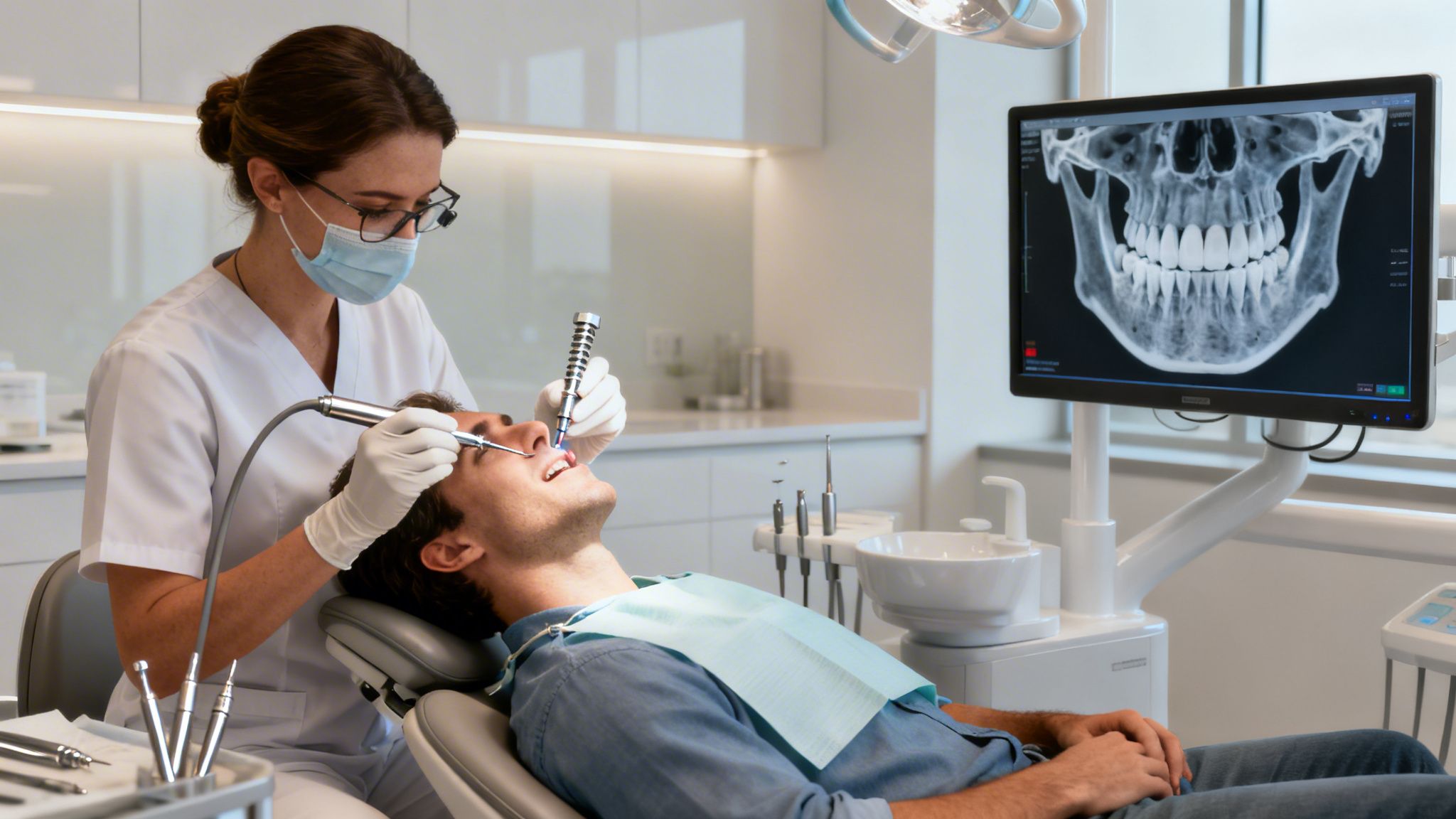
At our North Austin and Georgetown offices, our dental hygienists are highly trained in implant care and use instruments designed specifically for this job. Traditional metal tools, while safe for natural tooth enamel, can create microscopic scratches on the surface of an implant crown or abutment. These tiny hiding spots can collect plaque and bacteria, leading to gum inflammation and more serious problems.
To prevent this, our team uses instruments made from materials that are tough enough to remove hardened plaque (calculus) but gentle enough to leave your implant surfaces pristine. These tools are typically made from:
- Resin or Plastic: Ideal for gently cleaning around the base of the implant without risking any damage.
- Carbon Fiber: Offers a bit more rigidity for effective cleaning while staying completely safe for your restorations.
- Titanium: In some cases, we use titanium scalers because they are biocompatible with the implant post itself.
This careful approach is a critical part of preserving the health and beauty of your new smile.
Looking Below the Surface with Advanced Imaging
What truly sets professional maintenance apart is our ability to see what you can’t. At 3D Dental, we use our advanced 3D CT imaging to get a clear picture of your implant’s health below the gumline. This technology gives us a detailed, three-dimensional view of the implant post and the all-important jawbone surrounding it.
During your check-up, we meticulously check for:
- Bone Levels: We measure the bone height around your implant to make sure it’s stable. Any bone loss is an early indicator of potential problems.
- Implant Stability: We confirm that the implant is securely integrated with the jawbone and that every component is functioning properly.
- Tissue Health: We carefully examine the gum tissue for any signs of redness, swelling, or bleeding—classic early warning signs of inflammation.
This proactive monitoring is our best defense against peri-implant disease, an inflammatory condition that can damage the gums and, if left untreated, destroy the very bone supporting your implant. This can ultimately lead to implant failure.
“The earliest stage, peri-implant mucositis, is reversible with professional cleaning and improved home care. Our goal is to catch it at this stage. That’s why consistent check-ups are so vital—they allow us to intervene before minor inflammation becomes a major threat to your implant.”
Regular professional care is about comprehensive oversight. By combining specialized tools with advanced diagnostic technology, we ensure your dental implants remain a healthy, functional, and beautiful part of your life. Consistent dental exams and cleanings are the cornerstone of this preventive strategy.
Lifestyle Choices That Protect Your Dental Implants
Excellent care for your new smile extends beyond your daily brushing and flossing. The choices you make every day—from what you eat to certain habits—play a massive role in the long-term health and stability of your dental implants. These habits act as an insurance policy for your smile, ensuring it stays healthy and strong.
At 3D Dental, we provide our patients in Austin and Georgetown, TX, with the real-world knowledge they need to protect their investment. This is how our dental care helps improve your overall mouth health.
Fueling Your Smile: The Implant-Friendly Diet
What you eat directly impacts the health of your gums and jawbone, which are the foundation holding your implants in place. A nutrient-rich diet helps reduce inflammation and provides the building blocks for strong, healthy bone.
While a soft-food diet is critical during the first few weeks of healing, you can enjoy the foods you love once you get the all-clear. It’s about making smart additions that actively support your oral health.
What to Load Up On:
- Calcium-Rich Foods: Dairy (milk, cheese, yogurt), leafy greens, and almonds help keep your jawbone dense and strong.
- Lean Proteins: Chicken, fish, and tofu are fantastic for tissue repair and promoting healthy gums.
- Crunchy Fruits & Veggies: Once fully healed, apples, carrots, and celery can help gently clean your teeth and stimulate your gums.
- Foods High in Vitamin C: Oranges, strawberries, and bell peppers are essential for producing collagen, which keeps your gum tissue firm and resilient.
While your new implants are incredibly strong, it’s common sense to avoid using them as tools. Biting down on ice, cracking nuts, or tearing open packages with your teeth can put excessive stress on the implant and restoration.
Habits That Can Undermine Your Implants
Just as a good diet can support your implants, a few bad habits can actively work against them. Being aware of these risks is one of the most important things we discuss with our patients from Cedar Park to Round Rock.
The single most destructive habit for dental implants is smoking or using any tobacco products. The chemicals in tobacco constrict blood flow to your gums, slowing the healing process and making it harder for your body to fight off infection. This dramatically increases the risk of peri-implant disease and implant failure.
Another common problem we see is bruxism, or chronic teeth grinding. Many people grind their teeth at night without realizing it. This habit can exert tremendous force on your implants, which can lead to a loose crown, a damaged abutment, or bone loss over time.
For our patients in the Austin area who grind their teeth, we almost always recommend a custom-fitted nightguard. This simple appliance creates a protective cushion between your upper and lower teeth, absorbing pressure and protecting both your natural teeth and your new implants while you sleep.
Your Overall Health Is Your Implant's Health
The long-term success of a dental implant is closely tied to your overall health. Sticking to a soft diet for two to four weeks post-surgery is crucial, and getting professional cleanings twice a year is non-negotiable for removing stubborn calculus.
With vigilant care, studies show that after a decade, 90% of upper jaw and 95% of lower jaw implants are still going strong. Managing conditions like diabetes is also a big piece of the puzzle, as is wearing a nightguard if you grind—peri-implant bone loss can affect up to 22% of grinders who don't use one.
By taking a proactive approach to your health, you give your implants the best possible chance to last a lifetime. This means keeping blood sugar in check and staying on top of any other systemic health issues. Protecting your gums is paramount; learn about our specialized professional gum treatment in Austin to keep your implant's foundation healthy.
What to Expect at Your Implant Check-Up in Austin
When you visit your dentist for an implant check-up, it should feel reassuring and comprehensive. At our North Austin and Georgetown, TX, offices, we see it as a crucial part of protecting your investment and ensuring your long-term success.
This visit is a thorough evaluation where we check in with you, review your home care routine, and answer any questions. Our goal is to make you feel completely confident in caring for your new smile. You can expect our team to listen to your concerns and provide clear, easy-to-understand guidance.
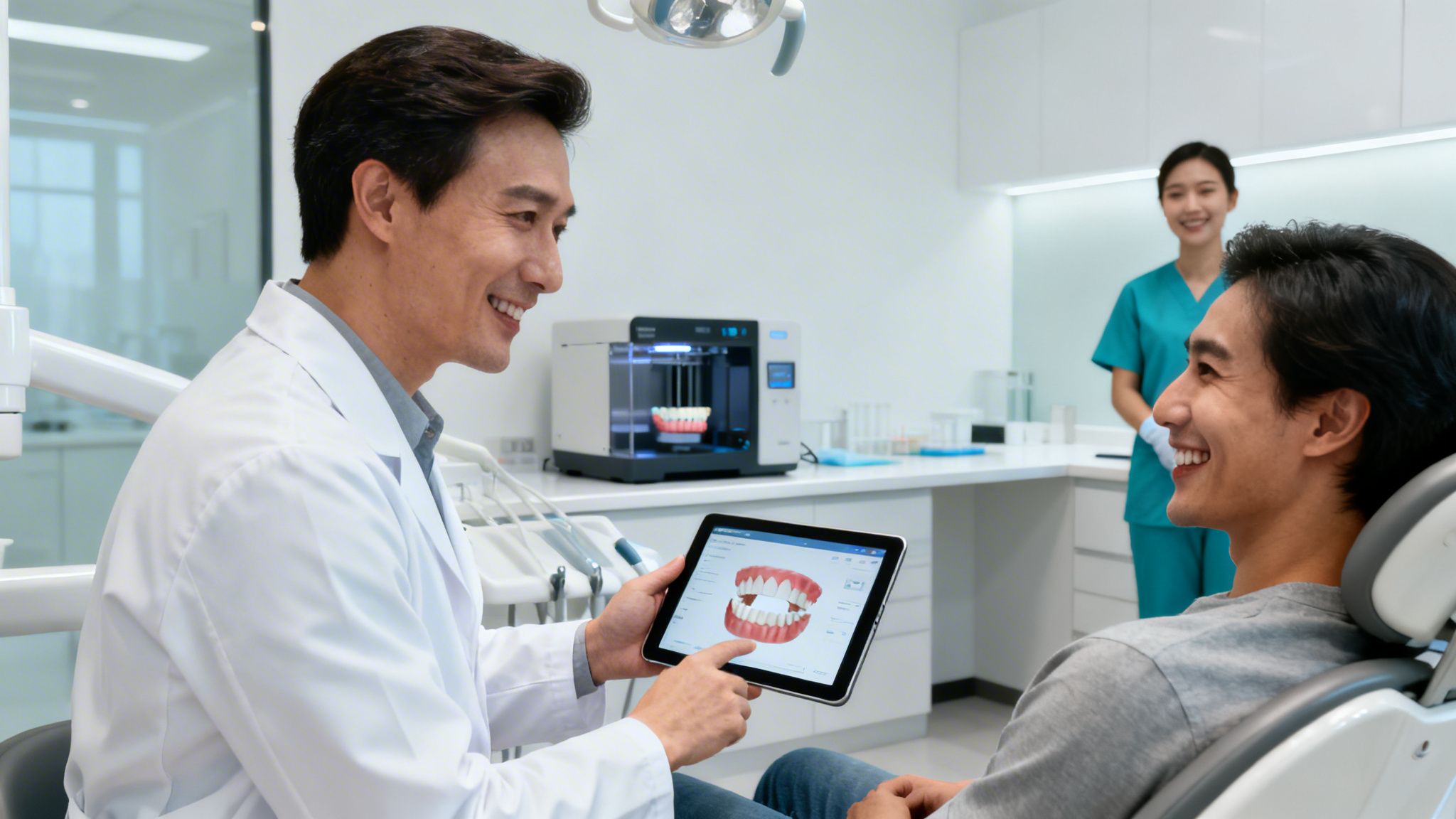
The Power of Precision Technology
One of the first things you'll notice is our commitment to technology that makes your visit faster, more comfortable, and incredibly accurate. We have moved beyond messy, goopy impression trays.
Instead, we use sophisticated digital scanners to create a precise 3D model of your mouth. This scan is quick and comfortable, giving us a perfect digital snapshot of your implant, teeth, and gums. This allows us to track even the tiniest changes over time—a game-changer for proactive care.
A Deeper Look with 3D Imaging
The real power behind our implant maintenance is our 3D CT imaging. This isn't a standard x-ray; it gives us a complete, three-dimensional view of your jawbone, showing us exactly what's happening beneath the surface. This is a key part of our new patient exams for implant follow-up care.
With this advanced imaging, we can:
- Verify Osseointegration: We get a clear picture confirming that the bone around the implant post is still strong and dense.
- Monitor Bone Levels: We check for any signs of bone loss, which is one of the earliest red flags for potential trouble.
- Assess All Components: We make sure the abutment and crown are perfectly seated and secure, preventing unwanted stress on the implant.
This detailed look allows our team of cosmetic dentistry experts in Austin to spot potential issues long before they become real problems, ensuring your smile stays healthy from the inside out.
At 3D Dental, our state-of-the-art diagnostic tools aren't just for placing implants; they are fundamental to our long-term care approach. We provide this level of detailed monitoring to all our patients, from Liberty Hill to Cedar Park, because we believe proactive care is the best care.
The Advantage of an In-House Lab
Another huge benefit of working with us is our in-house dental lab. If we find that your crown needs a small adjustment or a professional cleaning beyond what a standard hygienist can do, our lab technicians are right here on-site.
This means no more long waits or multiple appointments while a restoration is sent to a third-party lab. For our patients in Round Rock and Wells Branch, this means we can often handle any necessary tweaks quickly and conveniently—sometimes even during the same visit. This restorative dentistry service ensures your smile always looks and feels its best.
Accessible and Affordable Care in Austin
We firmly believe that outstanding dental care, including routine maintenance for your implants, should be within reach for everyone. Our team is skilled at navigating insurance benefits and will work with you to maximize your coverage.
For any out-of-pocket expenses, we offer flexible financing solutions. We have an in-house payment plan and have partnered with trusted "treat now, pay later" providers like Cherry and Sunbit. Our goal is simple: remove financial hurdles so you can focus on keeping your smile beautiful and healthy for a lifetime.
Common Questions We Hear About Implant Care
It's natural to have questions about how to best care for your new dental implant. Here are some of the most common things our patients in Austin and Georgetown ask. We want you to feel completely confident in your new routine so you can protect that beautiful smile.
Can I Just Use My Regular Toothpaste and Mouthwash?
This is a fantastic question. The short answer is: it’s all about being gentle. We always recommend using a non-abrasive toothpaste, typically a gel formula. Gritty, abrasive pastes can create microscopic scratches on your implant crown, giving plaque a perfect place to hide. Pair that with a soft-bristled toothbrush for the best results.
As for mouthwash, your best bet is an alcohol-free, antimicrobial rinse. Alcohol-based products can dry out your mouth, which isn't great for long-term gum health around your implant. During your next check-up at our Austin or Georgetown office, we can recommend specific products we trust.
What Are the Warning Signs of an Implant Problem?
Implant problems are rare with great home care, but it’s smart to know what to look for. Think of yourself as the first line of defense in your oral health. If you experience sudden tooth pain or discomfort, don't hesitate to call us, as we also offer emergency dentist services.
Give our office a call right away if you notice any of these signs:
- A persistent ache or throbbing feeling around the implant.
- Swelling or any bleeding when you brush or clean around the implant.
- Gums that look puffy, red, or feel tender to the touch.
- Any feeling of movement whatsoever, or if the implant feels loose.
Catching a potential issue early is everything. Your regular check-ups at 3D Dental are the best way for us to spot trouble before it escalates, protecting the investment you've made in your smile.
The most reliable way to monitor your implant's health is through professional evaluation. Our advanced 3D imaging allows us to see the bone supporting your implant, providing peace of mind that goes beyond what you can see in the mirror.
How Is Caring for All-on-4 Different From a Single Implant?
The goal is exactly the same: get rid of plaque every single day. The main difference is the tools you'll use. With a single implant, you focus on cleaning around one individual crown. But with an All-on-4® restoration, the priority is cleaning the small space between the full-arch bridge and your gums.
This is where a water flosser becomes an essential, non-negotiable tool. We also show our patients in Cedar Park and Round Rock how to use specialized floss threaders or super floss to gently sweep underneath the bridge. This simple habit makes a massive difference in preventing gum inflammation and ensuring your new smile lasts a lifetime.
How Often Do I Need a Professional Implant Cleaning?
Once you're through the initial healing phase, most of our implant patients schedule professional cleanings every six months, just like with natural teeth. This regular visit allows our hygienists to use specialized tools to gently and effectively clean areas around the implant that are tough to reach at home.
However, we create a personalized maintenance plan for everyone. If you have a history of gum issues or other specific needs, we might suggest coming in more often. Our commitment at 3D Dental is to provide care tailored specifically to you, ensuring your smile stays healthy for good.
Your new smile is a lifelong investment, and our team at 3D Dental is here to help you protect it every step of the way. As a trusted dentist serving Austin and Georgetown, TX, we are dedicated to helping you achieve a healthy, bright smile. If you have more questions or are ready to schedule your next implant maintenance visit, contact us today. Book your appointment online and let us take care of you.
Ready to get started?
Schedule a free, no obligation consultation with our team and see what's possible for your smile!
Georgetown
- Mon-Thurs8:30am-5pm
- Fri8am-3:30pm
- Sat-SunClosed
Austin
- Mon-Tues8am-5pm
- Wed-Thurs9am-6pmFri8am-2pm
- Sat-SunClosed